
How many porta potties do I need for a construction site?
OSHA 1926.51(c) sets the baseline: 1 toilet for 20 or fewer workers, then 1 toilet seat and 1 urinal per 40 workers once you cross 20, and 1 seat and 1 urinal per 50 workers at 200 or more. A 15 person framing crew in Great Falls needs just 1 unit. A 60 person crew needs 2 seats and 2 urinals, which in practice means 2 to 3 standard units depending on layout. Most crews round up rather than split hairs, since a jobsite with no working toilet stalls out fast. If you are staffing a bigger build, construction site services covers fencing and power alongside toilets, and the standard porta potty rental page has the unit specs. Check OSHA portable toilet requirements for the full bracket table before you order. Handwashing is separate from toilet count: if anyone on site is applying paints, coatings, herbicides or insecticides, OSHA 1926.51(f)(1) requires washing facilities for that work, and a handwashing station rental covers it cleanly.
How many porta potties do I need for an event?
Event math runs looser than the jobsite table because OSHA does not govern public gatherings, but the industry rule of thumb is 1 unit per 50 guests for a 4 hour event, then add units as hours or drinking increase. A 200 person outdoor wedding near Black Eagle, 3.9 miles northeast of Great Falls, would land around 4 standard units plus 1 ADA accessible porta potty, since ADA Standards section 213.2 requires at least one accessible unit in any cluster and never fewer than one no matter how small the group. A festival pulling 1,000 people over 8 hours needs a heavier ratio; see festival restroom rental for that math worked separately. For a backyard gathering under 50 guests, 1 deluxe flushable porta potty usually covers it.
Do I need more units if alcohol is served?
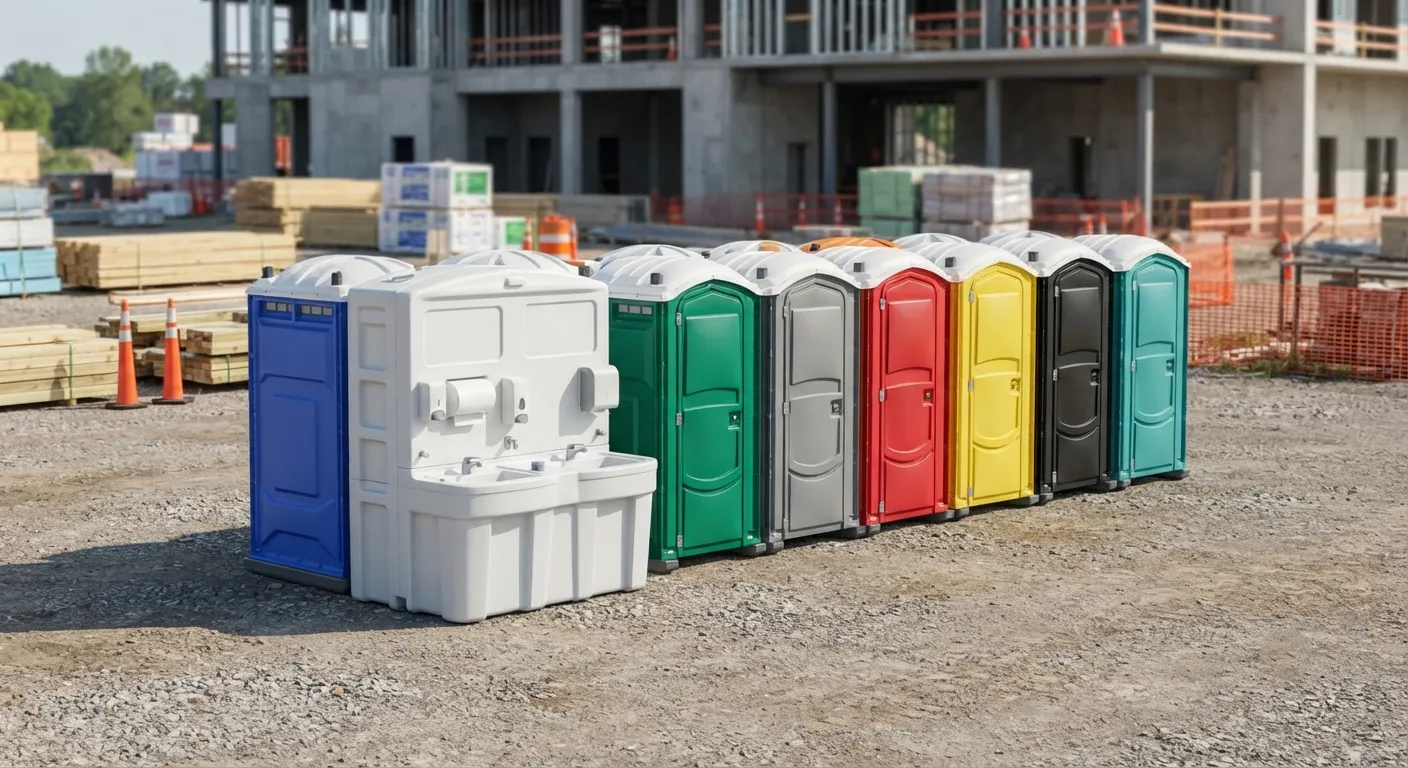
Yes. Alcohol increases bathroom trips and slows turnover at each unit, so add roughly 10 to 20 percent more capacity to your base event count. A 150 guest reception that would normally need 3 units should plan for 4 once a bar is involved. Multi-day events compound this further: a 3 day county fair needs not just more units but a tighter service schedule, since ANSI/PSAI Z4.3 sets a baseline service interval of once per week for up to 10 users over a 40 hour week, and a busy multi-day event blows past that fast. County fair restrooms and golf tournament restrooms both cover heavier multi-day staffing. If your event runs Friday through Sunday, budget for daily service rather than a single weekly visit, and confirm the schedule when you request a quote.
What is a worked example for a jobsite?
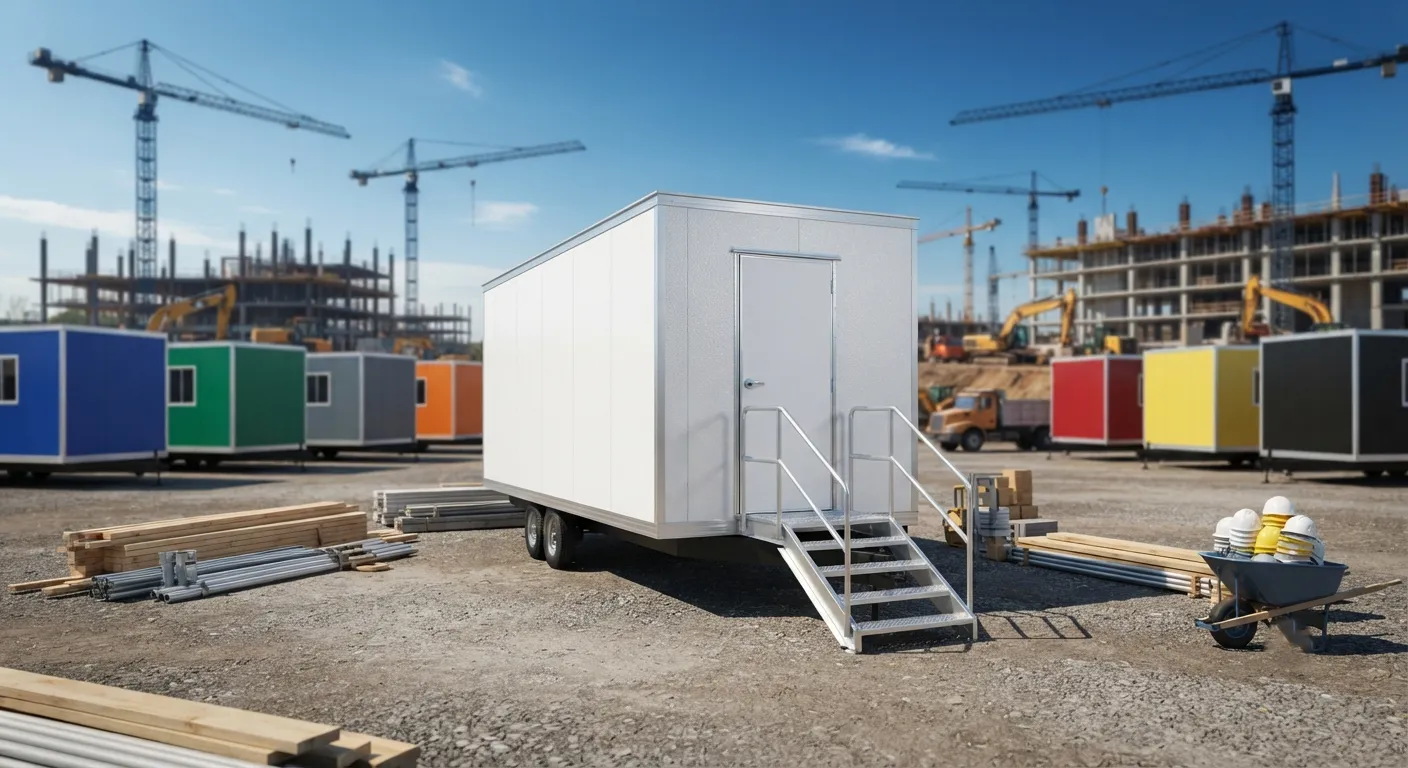
Take a 45 person road crew working outside Malmstrom AFB, 5.9 miles east of Great Falls. Under OSHA 1926.51(c), 45 workers fall in the 21 to 40 bracket needing 1 toilet seat and 1 urinal per 40, so this crew needs 2 seats and 2 urinals minimum, delivered as 2 to 3 standard units. A standard unit holds a 60 to 70 gallon tank and stands about 92 inches tall, footprint roughly 44 by 48 inches, so 3 units fit against a fence line without eating much staging space. Daily rental for a standard unit runs 100 to 350 dollars depending on term, with weekly and monthly rates dropping the per-day cost; see porta potty rental per day and monthly porta potty rental for the breakdown. Add a temporary fence rental if the site sits near foot traffic.
What is a worked example for an event?
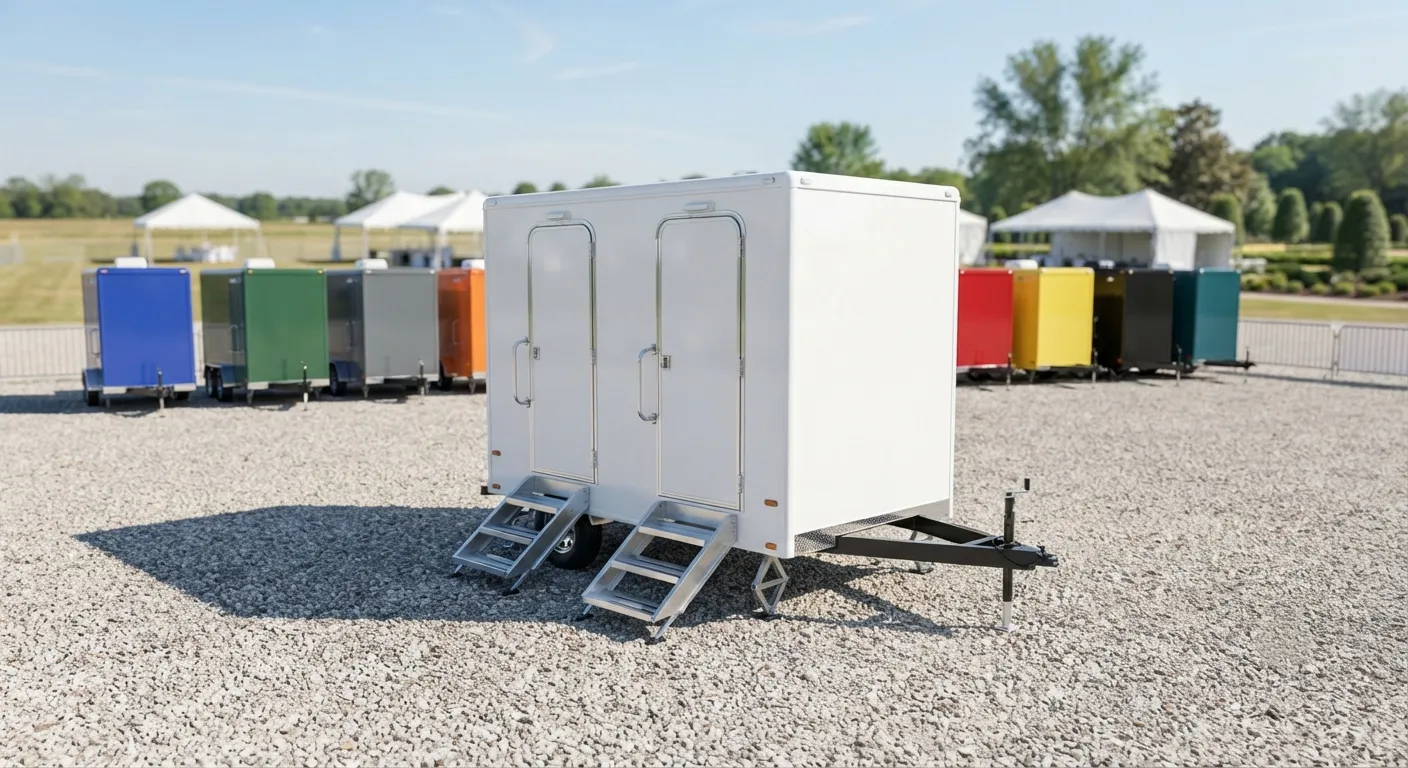
A 300 person outdoor concert near Gibson Flats, 5.4 miles southeast of Great Falls, running 6 hours with beer sales, needs roughly 6 standard units at the 1-per-50 baseline, then 1 to 2 more for the alcohol bump, landing at 7 to 8 units total plus 1 ADA unit under ADA Standards section 213.2. That is a meaningfully bigger order than a dry event of the same size. Concert restroom rental and marathon and race restrooms both run this same headcount-times-hours math, just with different flow patterns since a race spreads crowds along a course instead of pooling them at a stage.
How does dumpster size factor into a big job site?
Toilets are not the only headcount-driven decision on a large build. Roll-off dumpsters scale the same way debris volume does. A 10 yard dumpster holds about 10 cubic yards, roughly 270 cubic feet, which answers how many cubic feet are in a 10 yard dumpster, and it fits jobs like a single room cleanout; a 10 yard dumpster measures about 16 feet long, which covers how many feet a 10 yard dumpster runs on the ground. A 20 yard dumpster holds about 20 cubic yards, close to 540 cubic feet, and typically handles 2 to 3 tons of mixed debris, which is the usual answer to how many tons a 20 yard dumpster holds. A 30 yard dumpster holds around 30 cubic yards and can carry roughly 3 to 4 tons depending on material density, which covers how many tons a 30 yard dumpster can hold, while a 40 yard holds about 40 cubic yards, close to 1,080 cubic feet, answering how many cubic feet are in a 40 yard dumpster, and it can take on a heavier 4 to 5 ton load on the right job, which is the rough answer to how many tons a 40 yard dumpster holds. None of these figures are OSHA numbers; they come from standard container capacity, not a labor regulation. See dumpster sizes and dimensions and dumpster weight limits for the fuller breakdown, and roll-off dumpster rental if you are ordering. A roll-off delivery needs about 60 feet of straight clearance behind the truck, which matters on a tight Great Falls lot.
Where should units go once I know the count?
Placement matters as much as the count. ADA Standards section 403.5.1 requires a 36 inch minimum clear route to any accessible unit, and section 404.2.3 requires a 32 inch clear door opening, so do not tuck the ADA unit behind equipment or a fence post. Section 304.3.1 also calls for a 60 inch turning circle in front of the unit, which rules out cramming it into a narrow gap. On a construction site, run units near the work zone but clear of vehicle paths, since OSHA 1926.25 requires debris and scrap kept clear of active work areas. For placement on public property or a street shoulder, right of way rules need confirming with the City of Great Falls before delivery; the porta potty placement guide and porta potty permit requirements pages walk through what to check first.
How many porta potties do I need per 100 guests?
Plan on 2 standard units per 100 guests for a 4 hour event, following the 1-per-50 baseline, plus 1 ADA unit under ADA Standards section 213.2 regardless of headcount. Add 1 more unit if alcohol is served or the event runs past 6 hours.
How many tons does a 30 yard dumpster hold?
A 30 yard dumpster typically carries around 3 to 4 tons, depending on how dense the debris is. Concrete and shingles weigh out faster than mixed household junk. Check 30 yard dumpster rental for size details before ordering.
How many cubic feet are in a 20 yard dumpster?
A 20 yard dumpster holds about 540 cubic feet, since 20 cubic yards converts to 27 cubic feet each. That is enough for a mid-size renovation cleanout. See 20 yard dumpster rental for footprint and loading details.
Do I need extra units for a multi-day event?
Yes. A single weekly service visit under the ANSI/PSAI Z4.3 baseline will not keep up with 3 straight days of heavy use. Either add units to stretch capacity between services or schedule daily servicing, especially with alcohol in the mix.
How many porta potties does a construction crew of 100 need?
Under OSHA 1926.51(c), 100 workers falls in the 41 to 200 bracket, needing 1 seat and 1 urinal per 40 workers, so plan on 3 seats and 3 urinals minimum, delivered as roughly 5 to 6 standard units.
What size dumpster do I need alongside porta potties on a demolition job?
Most demolition jobs run a 30 or 40 yard dumpster since debris volume is high, while toilet count follows the OSHA 1926.51(c) crew size table separately. See construction dumpster rental and 40 yard dumpster rental for capacity specifics.
Next step
Get a delivery date
Tell us the address, the dates and the headcount. We size the order and confirm the route.