
How many restrooms does a county fair need?
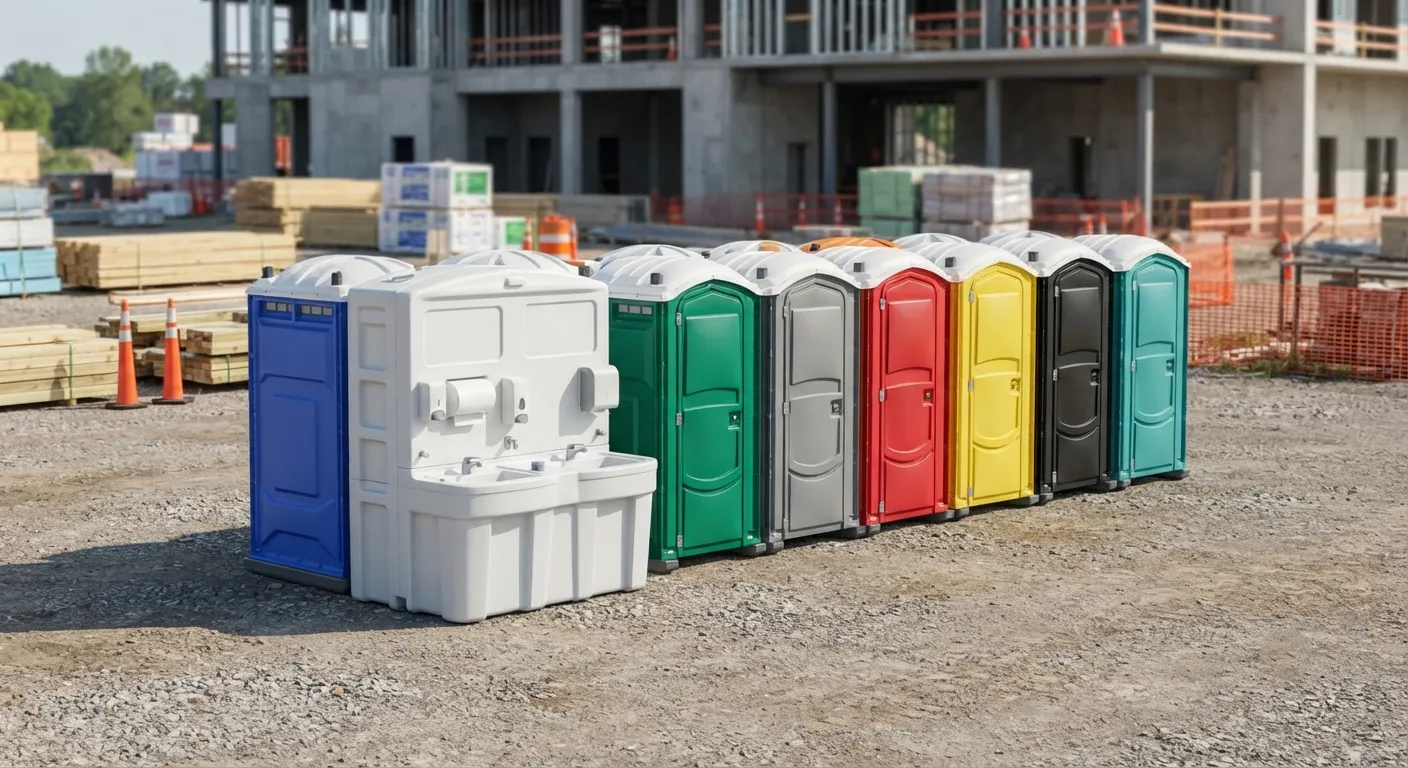
There's no single number, because fairs run differently by hour and by day. Gate count on a Saturday afternoon isn't the same load as a Tuesday morning 4-H judging session. We start with peak-hour attendance, not daily totals, then work backward. For general public sanitation OSHA 1926.51(c) sets a baseline of 1 toilet for 20 workers or fewer on a jobsite, and while that ratio is written for crews, not fairgoers, it's the same logic fair planners lean on: count people at their busiest hour, not their average hour. A grandstand concert or a tractor pull draws different crowds than the livestock barns, so we usually split units between the midway, the barns, and the grandstand rather than clustering everything near one gate. Our standard porta potty rental units run 44 by 48 inches on the ground and about 92 inches tall, which fits tight midway rows without eating walkway space. For a rough headcount before you call, the how many porta potties do I need guide walks through the math event by event, and our event restroom rental page covers layout basics that carry over from fairs to festivals. Multi-day fairs also need a servicing plan, not just a delivery, since a unit serviced once for a two-day gate count will run out of capacity by day two.
Where should restrooms go on a fairgrounds?
Restrooms belong near foot traffic, not near the fence line where nobody walks. We place clusters at barn entrances, midway crossroads, and grandstand exits, because that's where people are already standing when they realize they need one. ADA Standards section 213.2 requires that where single-user portable units are clustered, at least 5 percent are accessible, never fewer than one, so every cluster we place includes an ADA-compliant unit rather than one lone accessible unit stuck far from the group. Our ADA accessible porta potty units meet ADA Standards section 304.3.1's 60 inch turning circle and section 404.2.3's 32 inch clear door opening, so a wheelchair user isn't fighting the door on top of everything else. Ground stability matters too: ADA Standards section 302.1 calls for floor and ground surfaces that are stable, firm and slip resistant, which on a fairgrounds usually means gravel pads or plywood under the unit, not bare mud after a rain. Delivery trucks need about 60 feet of straight clearance behind them for roll-off and trailer placement, so we walk the site plan with fair organizers before the gates open, not the morning of. If your fairgrounds also run livestock or ag exhibits, see farm and agricultural restrooms for handling that side separately from the public midway. Vendors handling food often need a paired handwashing station rental nearby, since 29 CFR 1910.141(d)(2) requires soap and towels or a hand-drying device at washing facilities, and hand sanitizer alone doesn't satisfy that.
What does a county fair restroom package cost?
Pricing depends on unit mix and how many days the fair runs. A weekend fair in Great Falls typically rents standard units in the 125 to 400 dollar weekend range, while multi-day fairs often price closer to a weekly rate instead of stacking daily charges.
| unit | day | week | weekend |
|---|---|---|---|
| standard | 100-350 | 130-500 | 125-400 |
| ada | 200-400 | 120-240 | 199-300 |
| deluxe | 85-1200 | 150-290 | n/a |
| trailer | 175-2500 | 150-1650 | 900-3000 |
For fairs wanting flush units instead of standard, the deluxe flushable porta potty line is a step up from standard without the full trailer cost. Larger fairs sometimes add a 4 stall restroom trailer or 8 stall restroom trailer near the grandstand to cut lines during peak shows. See porta potty rental cost and porta potty rental per day for how daily and weekly rates compare across unit types, and restroom trailer rental cost if a trailer is on the table. Fairgrounds near Black Eagle, 3.9 miles northeast of Great Falls, and Malmstrom AFB, 5.9 miles east, fall inside our normal delivery radius without extra routing. If your event runs longer than a weekend, ask about monthly porta potty rental pricing instead of paying daily rates the whole run.
How far in advance should I book fair restrooms?
Book as soon as your fair dates are set, ideally 60 to 90 days out. Fair season in Montana compresses demand into a few weekends, so units and trailers get reserved early. Waiting until two weeks out limits your unit mix and may push you toward whatever's left rather than what fits your layout.
Do fairgrounds need ADA-compliant units?
Yes. ADA Standards section 213.2 requires at least 5 percent of clustered units be accessible, never fewer than one. We build that into every fair quote automatically, placing accessible units inside each cluster rather than off to one side, so nobody has to travel across the grounds separately.
How often are units serviced during a multi-day fair?
Servicing depends on attendance, but ANSI/PSAI Z4.3 sets a baseline of one visit per week for up to 10 users over 40 hours; a busy fair day blows past that fast. We typically service high-traffic clusters daily during multi-day fairs. See how often are porta potties cleaned for how that scales with crowd size.
Can I get handwashing stations alongside restrooms?
Yes. Food vendors especially need paired handwashing, since 29 CFR 1910.141(d)(2) requires soap and towel or hand-drying access, not sanitizer alone. Add handwashing station rental or a portable sink rental unit to any restroom order at no extra delivery trip.
What if my fair runs longer than expected?
Call us and we'll extend the order. Weather delays and extended judging schedules happen every fair season. We'd rather adjust your existing order than have units pulled mid-event; reach out through request a quote or contact as soon as you know dates are shifting.
Next step
Get a delivery date
Tell us the address, the dates and the headcount. We size the order and confirm the route.